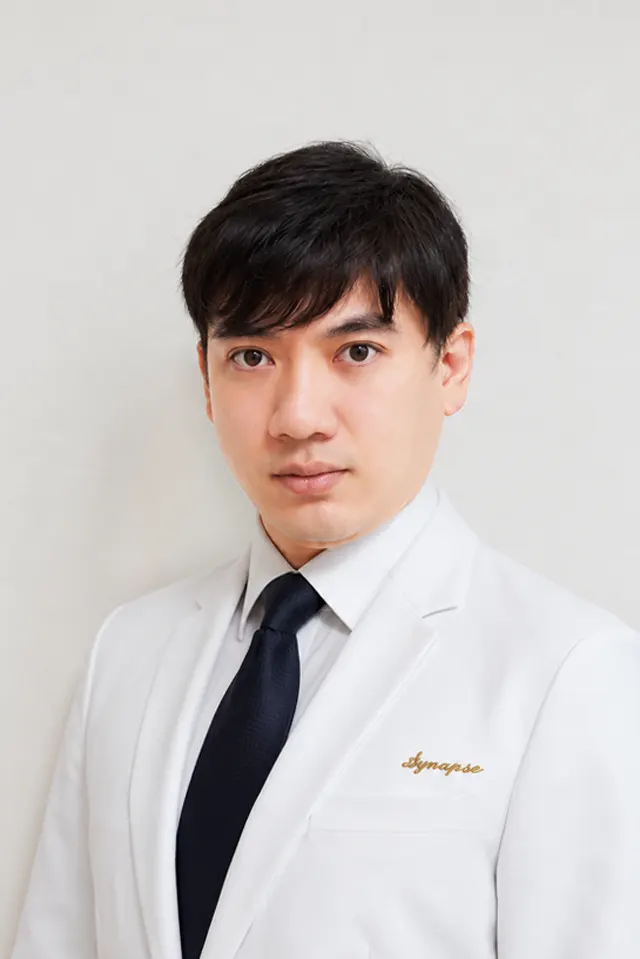
Since 2004, he has been engaged in the research and development of blue-violet laser technologies, which form the foundation of next-generation optical systems, including Blu-ray–based platforms. He conducted foundational research into nanoscale optical applications and their potential deployment in medical imaging diagnostics and non-invasive therapeutic technologies.
In 2005, he initiated the conceptualization and development of a radiation-free transmission diagnostic system, aiming to establish a safer medical imaging modality as an alternative to conventional X-ray–based diagnostic technologies.
In 2008, he was selected as a Research Fellow under the Ministry of Education, Culture, Sports, Science and Technology (MEXT) Global COE Program, and in July of the same year, he was appointed International Project Manager. In this role, he led interdisciplinary research teams and facilitated international collaborative initiatives bridging regenerative medicine and medical device development.
In 2009, he received the Best Award at an international symposium jointly hosted by the Massachusetts Institute of Technology (MIT) and Stanford University, where his work was internationally recognized for its high level of implementation capability and applicability in next-generation medical technologies.
Beginning in 2010, he conducted research on immortalized cell lines and long-term cell culture techniques, contributing to the establishment of stable cell supply systems within the field of regenerative medicine.
In 2014, he successfully established and scaled the production of growth factor–based skin regeneration technologies. These innovations, aimed at applications in wound healing and aesthetic medicine, led to the successful commercialization of related products.
In 2016, he advanced research and development initiatives involving both human stem cells and plant-derived stem cells, contributing to the foundational framework of next-generation regenerative medicine through the medical application of cell-derived components and the reevaluation of natural biological resources.
In 2018, he developed a conversational training program for healthy individuals designed to facilitate more effective communication with patients living with dementia. This initiative gained recognition as a pioneering approach in non-pharmacological cognitive care interventions.
In 2020, in response to the global spread of COVID-19, he established a deep ultraviolet (DUV) laser–based viral inactivation technology, demonstrating high efficacy as a non-contact infection prevention measure. Concurrently, he initiated research and development into novel non-pharmacological preventive technologies aimed at infection control.
In 2021, he proposed a novel neurotherapeutic approach, Synapse Therapy, as a response to neurological disorders that have proven difficult to address through conventional medical interventions. This approach does not rely on pharmaceuticals, medical devices, or surgical procedures, and is grounded in a clinical model based on neural plasticity and adaptive mechanisms, promoting non-invasive and immediate functional improvement as a new paradigm in rehabilitation.
In 2022, he established the Neural Medical Institute of Technology as an educational organization dedicated to the systematic training of healthcare professionals and practitioners in neurotherapeutic techniques. The number of participants exceeded 1,000, and clinical applications rapidly expanded nationwide.
In the same year, he introduced a novel non-surgical treatment for acute strabismus, thereby extending the clinical potential of non-invasive approaches to neural function.
In 2023, he developed passive rehabilitation methods addressing post-COVID-19 sequelae, including impairments in taste and olfaction, as well as periarticular inflammation. He further established intervention programs aimed at improving autonomic nervous system function, thereby providing a comprehensive approach to neural regulation and functional recovery.
In 2024, he advanced the research and development of a visual neural stimulation tool, the “Kaleidoscope,” designed to enhance cognitive activation and attentional function in older adults.
In the same year, he was appointed as a final judge for the National Manual Therapy Championship of Japan, where he introduced neuroscientific perspectives into the evaluation of therapeutic techniques.
In 2025, he inaugurated the world’s first specialized neurotherapeutic facility, the Synapse Center, in Tunisia and assumed the role of Director. Through this initiative, he accelerated the transfer of medical technologies and the establishment of international cooperation frameworks across Africa and the Middle East.
In the same year, his presentation at the Japanese Society of Fatigue Science on immediate functional improvements in patients with Parkinson’s disease through a peripheral nervous system–based approach generated significant attention as a breakthrough in non-pharmacological therapy.
He was also appointed Executive Committee Chair of the Well-being Conference in the Principality of Monaco and assumed the role of Board Member of the WFCMS Rheumatology Specialist Committee.